Boat rental with skipper in the Canary Islands
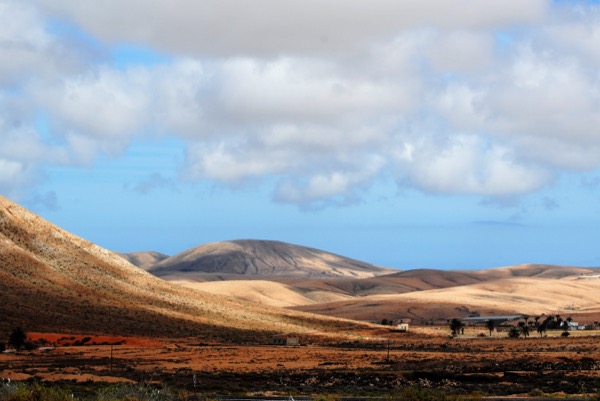
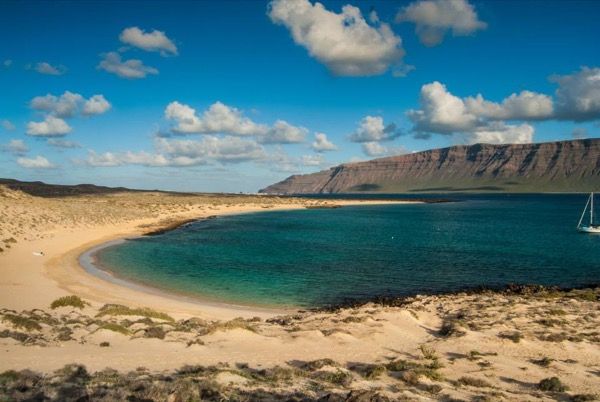
After having seen the blondest of the Chinijo Archipelago from the shore of the Risco de Famara, it maks our mouths water, thinking of its golden beaches, its placid houses stretched out on the sandy ocher canvas or the turquoise sea that caresses it. This island is for special, sensitive travelers who know how to enjoy nature, silence, beauty, and of course the sun and lonely beaches.
La Graciosa is probably one of the few places in Europe where there are still no paved roads. It is the most unknown and the one that exudes the most serenity of the Canary Islands.
All these conditions make it a perfect island to enjoy the boat rental with skipper in La Graciosa
MARINE RESERVE OF THE CHINIJO ARCHIPELAGO
The island of La Graciosa is part of the Chinijo Archipelago Marine Reserve (Chinijo is a local adjective that means small, it is used mainly to refer to children). With 70,700 hectares, it is the largest marine reserve in Europe and an area of exceptional landscape value. This reserve is circumscribed in the municipalities of Teguise and Haría and is made up of the islets of La Graciosa, Alegranza, Montaña Clara, Roque del Este, Roque del Oeste or del Infierno and the Famara cliff. It was created in 1995 with the aim of guaranteeing the sustainable exploitation of fishing resources. Among other protection measures, all kinds of maritime fishing and extraction of live species are prohibited, although professional fishing for salemas and migratory pelagic species with hook rigs and the traditional arts of the area is allowed, as well as recreational fishing no less than 2 miles from this enclosed space.
A determining factor of its natural wealth is the marine environment that surrounds it, which from a biological point of view, is one of the richest and most varied in the Canary Islands. So far, 304 species of marine macroalgae have been catalogued, which represents 53.15% of the total florula of the Canary Archipelago and is the area of the Islands with the highest index of diversity of macroalgae species.
The resources of these waters explain the abundance of seabirds, which find in them the basis of their food. This has motivated the park to have been declared a Special Protection Area for Birds (ZEPA) and is by definition an area of ecological sensitivity. The largest population is the Cinderella Shearwater (between 7,500 – 10,000 pairs), considered the largest colony in the national territory. Among the rarest and most threatened species, there is the Paiño Pechialbo or (raptors such as Kestrel), Owls, Leonor’s Falcon or “Fin” (Falco Eleonorae) and the Guincho or Osprey (Pandion halla etus).
Another of the most significant potential values of this Marine Reserve is, no doubt about it, the historical references to the presence of the monk seal (Monachus monachus). This marine vertebrate, which is today in danger of extinction worldwide, survived thanks to the tranquility and biological richness offered by these coasts, with abundant caves and jameos where it took refuge and reproduced. Currently, Alegranza is one of the potential territories for the reintroduction of populations of this seal, heavily depleted and pillaged on the nearby Mauritanian and Mediterranean coasts.
Within this reserve, a maximum protection zone is also established, called the Integral Marine Reserve, included in the area of a circle with a radius of one mile, centered on Roque del Este. In this area it is prohibited to carry out any type of marine fishing or extraction of live species and it can only be accessed for purposes of scientific interest and with the express authorization of the Canary Islands Government Department of Fisheries.